College Math Difficulty Tier List: From NPC to Eldritch Horror 💀
Undergrad trauma edition. Grad-level probability not included because that is no longer a course, that is a lifestyle disease.
🧮 1. Calculus I
Limits, derivatives, basic integrals.
The first boss of STEM. It feels scary because everyone tells you it is scary. Then you realize half the class is just learning how not to drop a minus sign.
Rating: $$ \boxed{\text{NPC with a graphing calculator}} $$
📊 2. Intro Statistics
 Mean, variance, normal distribution, confidence intervals, p-values.
Mostly button-pressing, formula-matching, and pretending you know what a p-value means.
Rating: $$ \boxed{\text{cooked, but microwave cooked}} $$
📐 3. Linear Algebra
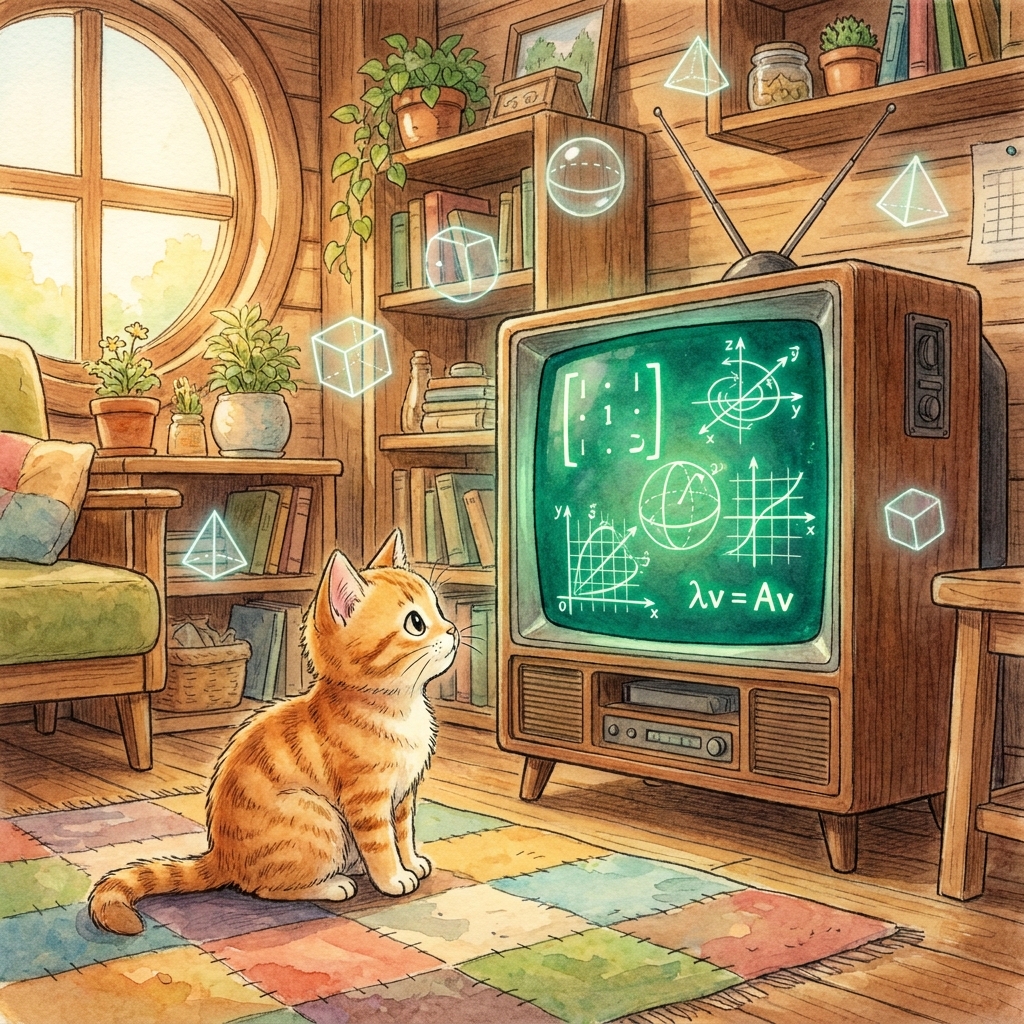 Matrices, determinants, eigenvalues, diagonalization.
At first it looks like arithmetic with rectangles. Then one day someone says “vector space” and the floor quietly disappears.
Rating: $$ \boxed{\text{NPC until it suddenly isn’t}} $$
🔄 4. Calculus II
 Integration techniques, series, polar coordinates.
This is where many pre-meds meet the reaper. Not because it is the deepest course, but because it is a bag of tricks wearing a trench coat.
Rating: $$ \boxed{\text{weed-out boss}} $$
🌪️ 5. Multivariable Calculus
Grad, div, curl, surface integrals, Stokes’ theorem.
Looks like Calculus I got a third dimension and started doing CrossFit.
Rating: $$ \boxed{\text{cooked in 3D}} $$
🧩 6. Discrete Math
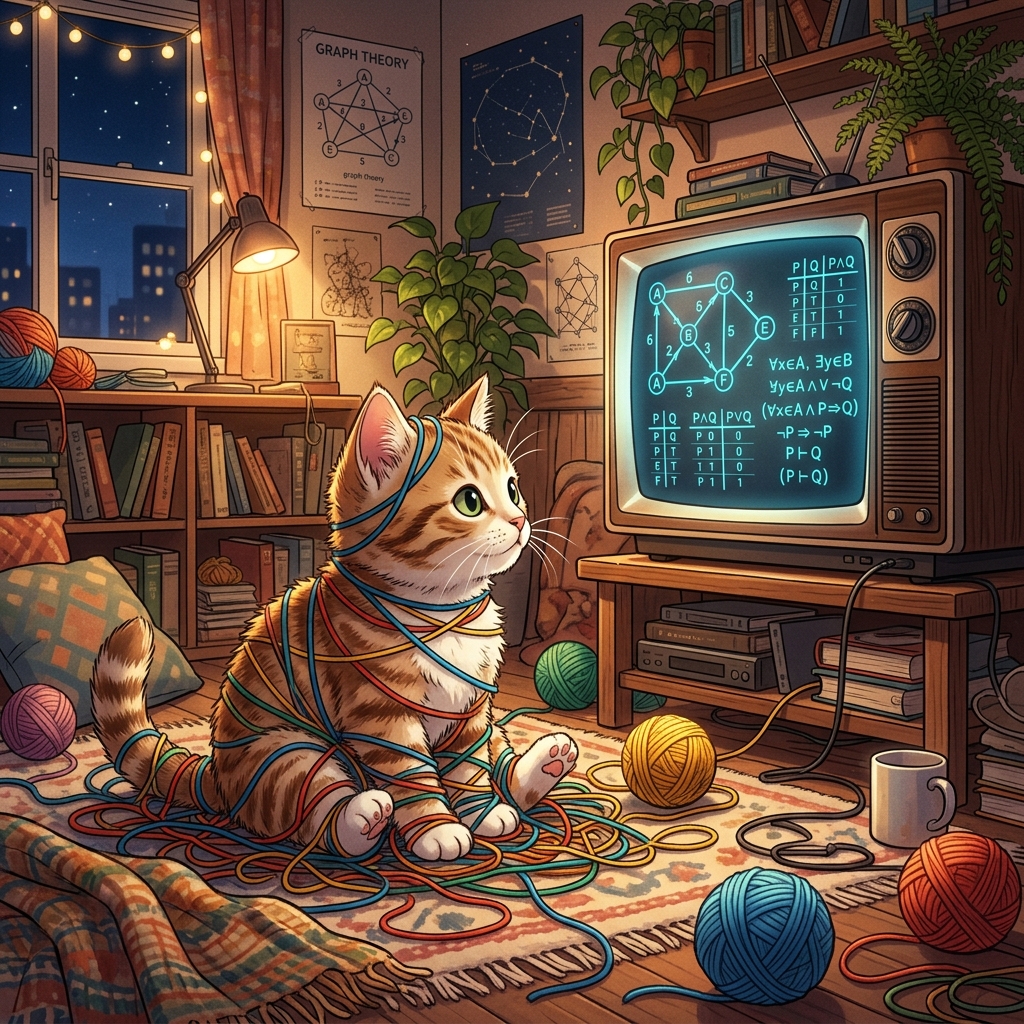 Logic, sets, induction, graphs, combinatorics.
This is where computer science students discover that “obvious” is not a proof.
Rating: $$ \boxed{\text{proof tutorial hell}} $$
⚙️ 7. Differential Equations
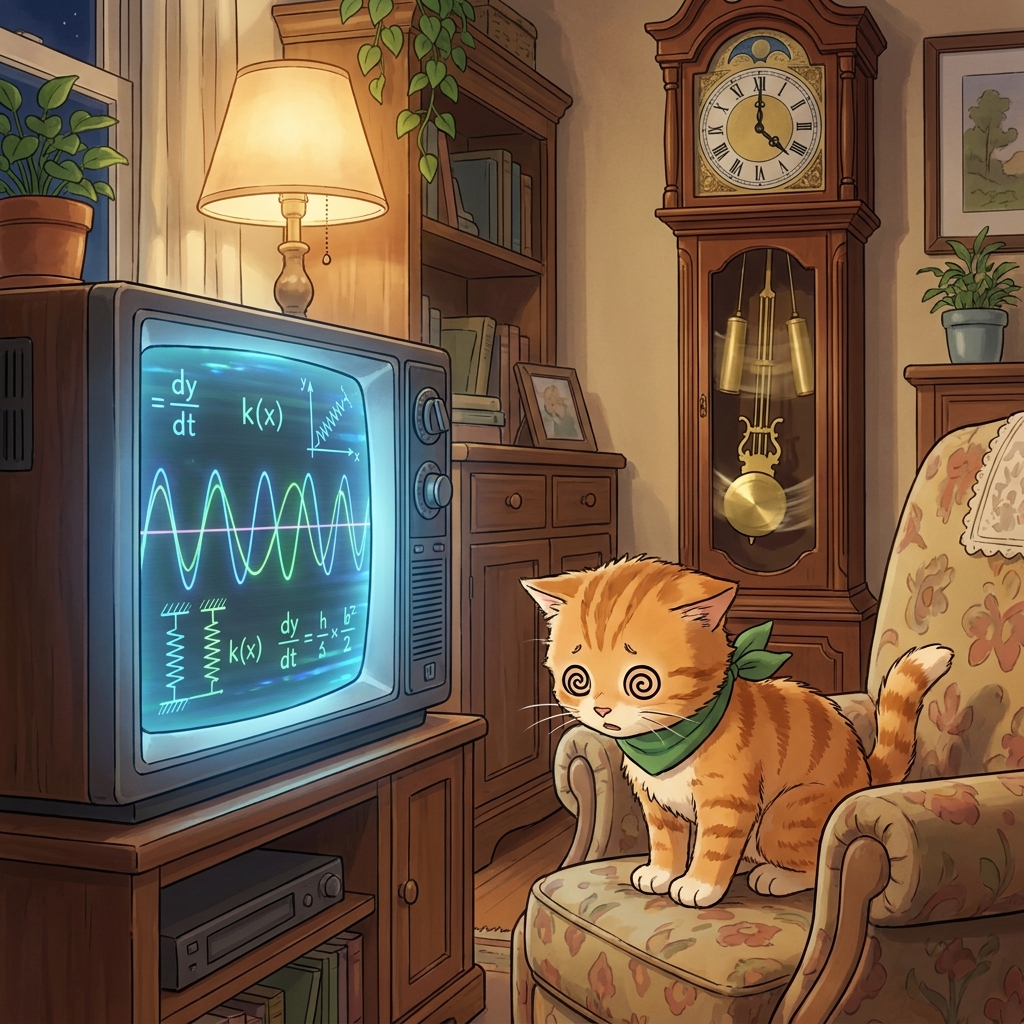 Solve this equation. Now solve this system. Now solve this thing that models a spring, a circuit, a plague, or your GPA.
Bonus note:
$\text{ODE}$ = still human
$\text{PDE}$ = the room gets cold
Rating: $$ \boxed{\text{engineer boss fight}} $$
⚖️ 8. Real Analysis
 Calculus, but the instructor removes all vibes and demands legal documentation for every sentence.
You thought limits were intuitive. Analysis says: prove it.
Rating: $$ \boxed{\text{canon event}} $$
🌀 9. Abstract Algebra
 Groups, rings, fields, modules.
No numbers. No graphs. No mercy. Just structure staring back at you.
Rating: $$ \boxed{\text{major character development}} $$
🍩 10. Topology
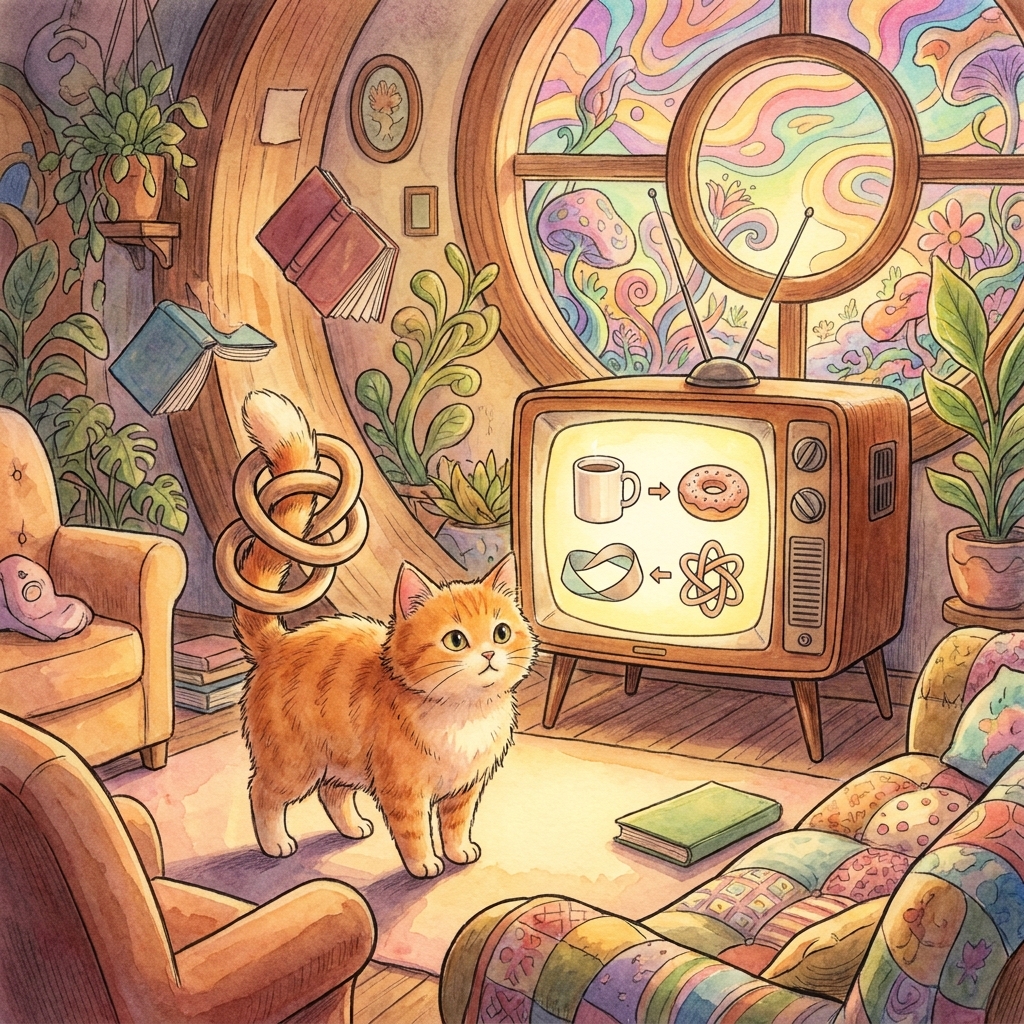 Open sets, compactness, connectedness, quotient spaces.
The course where a coffee mug and a donut become relatives, and somehow that is your problem.
Rating: $$ \boxed{\text{geometry after taking psychedelics}} $$
🌌 11. Measure Theory / Functional Analysis
Measure theory asks: what even is size?
Functional analysis asks: what if linear algebra happened in infinite dimensions and all your instincts were illegal?
Rating: $$ \boxed{\text{eldritch DLC}} $$
☠️ 12. Measure-Theoretic Probability / Stochastic Analysis
 This is not “probability and statistics.” This is probability after it joined a monastery, studied analysis for ten years, and came back speaking in filtrations.
Intro probability: $$ P(A\mid B)=\frac{P(A\cap B)}{P(B)} $$
Measure-theoretic probability: $$ \text{conditional expectation as an } L^2 \text{ projection modulo null sets} $$
Stochastic analysis: $$ dX_t=b(X_t)dt+\sigma(X_t)dW_t $$
Translation:
The Brownian motion is driving and you are in the trunk.
Rating: $$ \boxed{\text{Probably dead}} $$
[!NOTE] Easter Egg:
- Intro Probability: I know what a coin flip is.
- Annals of Probability: The coin flip lives in a Polish space and no longer answers your emails.
Comments